Feeling tired all the time?
Do you often feel dizzy, weak, or short of breath even after resting?
These symptoms are sometimes blamed on stress or lack of sleep. But in many people, the real cause may be something simple — low iron levels.
Iron deficiency is one of the most common nutritional problems worldwide. Because of this, many people take iron tablets to improve energy and prevent anemia.
But here’s what many people don’t know:
When is the best time to take iron tablets?
Are there side effects?
Can taking iron incorrectly cause problems?
While iron supplements may be very helpful, taking them the wrong way may reduce absorption or cause stomach discomfort.
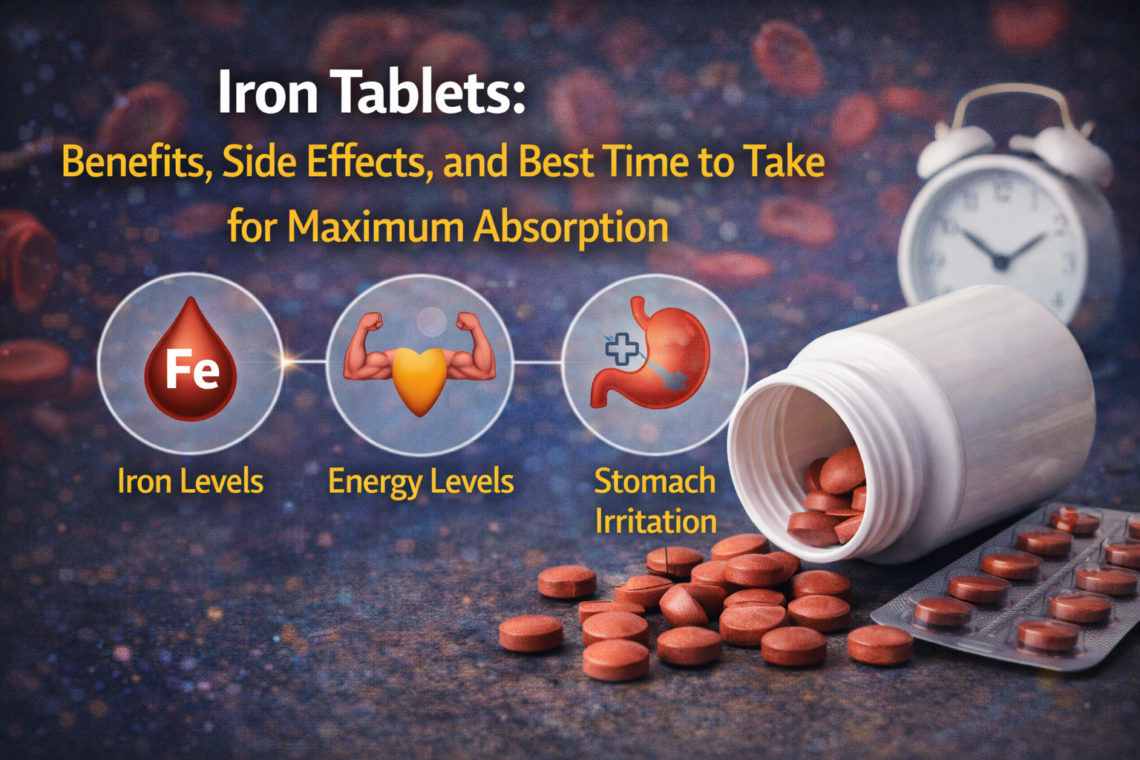
In this article, we’ll explain the benefits, side effects, and the safest time to take iron tablets for better results.
What Are Iron Tablets?
Iron tablets are supplements that provide extra iron to the body.
Iron is an essential mineral that helps:
- Produce red blood cells
- Carry oxygen in the blood
- Support energy production
- Prevent anemia
Iron tablets are commonly recommended for people who:
- Have iron deficiency
- Have anemia
- Feel chronic fatigue
- Lose blood frequently
- Are pregnant
They come in different forms such as:
- Ferrous sulfate
- Ferrous fumarate
- Ferrous gluconate
All provide iron, but absorption and tolerance may vary slightly.
Benefits of Iron Tablets
When used properly and only if needed, iron tablets may provide several benefits.
🩸 1. May Increase Red Blood Cell Production
Iron is needed to make hemoglobin.
Hemoglobin helps carry oxygen around the body.
Adequate iron may:
- Improve oxygen delivery
- Support healthy blood levels
- Prevent anemia
🩸 2. May Reduce Fatigue and Weakness
Low iron often causes tiredness.
Taking iron tablets may help:
- Improve energy
- Reduce weakness
- Increase stamina
- Improve daily performance
Many people feel more active once iron levels improve.
🩸 3. May Improve Brain Function
The brain needs oxygen to work well.
Proper iron levels may help:
- Improve focus
- Support memory
- Reduce brain fog
- Enhance concentration
This is especially important for students and working adults.
🩸 4. May Support Pregnancy Health
During pregnancy, iron needs increase.
Iron may help:
- Support baby’s development
- Prevent anemia in mothers
- Reduce complications
This is why iron supplements are often recommended during pregnancy.
🩸 5. May Support Hair and Skin Health
Severe iron deficiency may affect:
- Hair growth
- Skin tone
- Nail strength
Correcting iron levels may improve overall appearance and health.
Best Time to Take Iron Tablets
Now let’s answer the most important question.
✅ Best Time: On an Empty Stomach (If Tolerated)
Iron is usually absorbed best when taken:
👉 1 hour before meals or 2 hours after meals
An empty stomach may:
- Improve absorption
- Help the body absorb more iron
But not everyone tolerates this well.
✅ Alternative: After Meals (If Stomach Sensitive)
Iron tablets may cause nausea or irritation for some people.
If you feel discomfort, you can:
👉 Take after light meals
Food may:
- Reduce stomach upset
- Improve comfort
- Make it easier to continue daily use
Even though absorption may be slightly lower, comfort is important for consistency.
✅ Take with Vitamin C for Better Absorption
Vitamin C may help the body absorb iron better.
You can take iron with:
- Orange juice
- Lemon water
- Vitamin C tablets
- Fruits rich in vitamin C
This may significantly improve effectiveness.
❌ Avoid Taking With These
Certain foods and drinks may block iron absorption.
Avoid taking iron with:
- Tea
- Coffee
- Milk
- Calcium supplements
- High-fiber foods
Wait at least 1–2 hours before or after these.
Possible Side Effects of Iron Tablets
Iron tablets are helpful, but side effects are common.
Most are mild and manageable.
⚠️ 1. Stomach Upset
The most common issue.
You may experience:
- Nausea
- Stomach pain
- Acidity
- Bloating
Taking after food may help reduce this.
⚠️ 2. Constipation
Iron may slow digestion.
This may cause:
- Hard stools
- Difficulty passing stool
Drinking water and eating fiber may help.
⚠️ 3. Dark Stools
Iron may turn stools dark or black.
This is usually harmless and normal.
⚠️ 4. Diarrhea (Sometimes)
Some people may experience loose stools.
This varies depending on the iron form.
⚠️ 5. Iron Overload (High Doses)
Taking too much iron without need may cause:
- Organ stress
- Nausea
- Vomiting
- Toxicity
Iron should not be taken unnecessarily.
More is not better.
Who Should Take Iron Tablets Carefully?
Be cautious if you
- Do not have confirmed deficiency
- Have stomach ulcers or acidity
- Have kidney or liver problems
- Take multiple supplements
- Have conditions like hemochromatosis (iron overload)
Testing before supplementation is often recommended.
How to Take Iron Tablets Safely (Best Practices)
✅ Do:
- Take recommended dose only
- Take with vitamin C
- Drink plenty of water
- Eat iron-rich foods
- Store safely away from children
- Stay consistent
❌ Avoid:
- Taking high doses without advice
- Taking with milk/coffee/tea
- Doubling doses
- Stopping suddenly without guidance
Balance is important.
Iron-Rich Foods You Can Add Naturally
Food should always be your first source.
Try adding
- Spinach
- Red meat
- Chicken liver
- Lentils
- Beans
- Pumpkin seeds
- Dates
- Eggs
Combining food + supplements may work best.
Scientific or Logical Explanation
Iron absorption happens mainly in the small intestine.
Certain substances help or block this process.
- Vitamin C → improves absorption
- Calcium/tea/coffee → reduce absorption
Food also slows digestion and reduces irritation.
That’s why timing affects both comfort and effectiveness.
Common Mistakes People Make
Avoid these errors
- Taking iron without testing
- Drinking tea immediately after
- Stopping due to mild side effects
- Expecting instant results
- Taking multiple iron products together
Iron levels usually improve gradually over weeks.
Frequently Asked Questions (FAQs)
1. What is the best time to take iron tablets?
On an empty stomach for best absorption, or after meals if sensitive.
2. Can I take iron at night?
Yes, if it doesn’t cause stomach discomfort.
3. How long should I take iron tablets?
Follow medical advice. It may take weeks to months.
4. Why do iron tablets cause constipation?
Iron may slow digestion in some people.
5. Can I take iron with milk?
No. Calcium may reduce absorption.
6. Do iron tablets increase energy quickly?
Energy may improve gradually as iron levels rise.
Final Takeaway
Iron tablets may be very helpful for people with low iron levels. They may improve energy, support blood health, and reduce fatigue.
But taking them incorrectly may cause side effects or reduce benefits.
The simple rule is:
Take iron wisely, at the right time, and only when needed.
Balanced nutrition and proper timing make the biggest difference.
Medical Disclaimer
This article is for educational and informational purposes only and does not replace professional medical advice. Always consult a qualified healthcare professional before starting or changing supplements.
Read More Article
Is Drinking Honey with Warm Water Really Effective? Benefits, Side Effects, and the Truth Explained
What Happens If You Skip Breakfast Every Day? Benefits, Risks, and What Your Body Experiences
Can Too Much Calcium Harm Your Kidneys? Benefits, Risks, and Safe Daily Limits Explained
Can Drinking Ginger Tea Daily Harm Your Body? Benefits, Side Effects, and Safe Use Guide