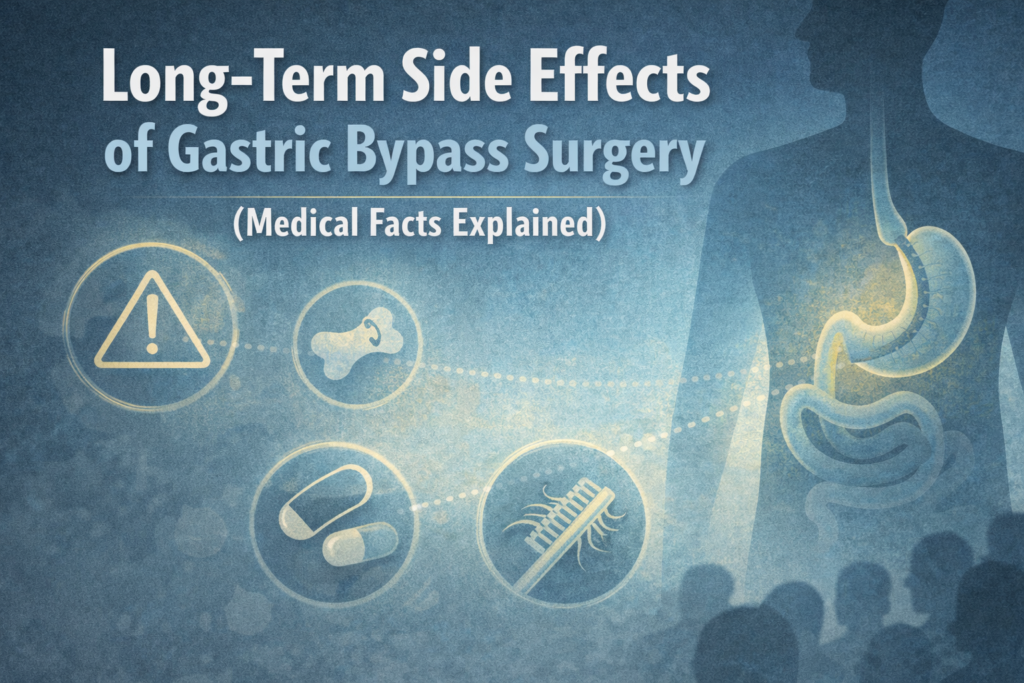
Gastric bypass surgery has helped millions of people lose weight, improve diabetes, and reduce obesity-related risks. But it’s not a shortcut — and it’s not risk-free, especially in the long run.
If you’re considering gastric bypass (or already had it), this guide explains the real, medically recognized long-term side effects — clearly, honestly, and without fear-mongering.
First, What Is Gastric Bypass?
Gastric bypass (commonly Roux-en-Y) works by:
- Creating a small stomach pouch
- Rerouting part of the small intestine
- Reducing how much food you eat and how many nutrients you absorb
This combination causes significant weight loss — but it also explains why long-term effects happen.
1. Long-Term Nutrient Deficiencies (Very Common)
This is the most well-documented long-term side effect.
Common deficiencies include:
- Vitamin B12
- Iron
- Calcium
- Vitamin D
- Folate
- Thiamine (Vitamin B1)
Why it happens
Food bypasses parts of the intestine where nutrients are absorbed.
Possible symptoms
- Fatigue and weakness
- Hair loss
- Brittle nails
- Anemia
- Nerve tingling or numbness
📌 Lifelong supplementation and blood tests are usually required.
2. Dumping Syndrome (Can Be Long-Lasting)
Dumping syndrome occurs when food moves too quickly from the stomach into the intestine.
Symptoms may include:
- Nausea
- Diarrhea
- Dizziness
- Rapid heartbeat
- Sweating after meals
Triggers
- Sugary foods
- Refined carbohydrates
- Large meals
⚠️ Some people experience this years after surgery, not just early on.
3. Bone Loss & Increased Fracture Risk
Long-term studies show higher rates of bone density loss after gastric bypass.
Why?
- Reduced calcium absorption
- Vitamin D deficiency
- Hormonal changes related to rapid weight loss
Risks
- Osteopenia
- Osteoporosis
- Fractures later in life
🦴 Regular bone density scans are often recommended after several years.
4. Chronic Digestive Problems
Many patients report ongoing digestive changes.
Possible issues:
- Chronic diarrhea or constipation
- Bloating and gas
- Food intolerances (especially dairy, fatty foods, red meat)
These symptoms may improve — or persist — depending on diet and gut health.
5. Hypoglycemia (Low Blood Sugar Episodes)
Some people develop post-bariatric hypoglycemia months or years later.
Symptoms include:
- Shakiness
- Sweating
- Confusion
- Heart palpitations
- Sudden fatigue
This happens due to overproduction of insulin after meals.
⚠️ Can be dangerous if untreated.
6. Weight Regain (Yes, It Happens)
Gastric bypass is powerful — but not permanent protection.
Causes of weight regain:
- Stretching of the stomach pouch
- High-calorie liquid foods
- Grazing habits
- Lack of long-term lifestyle support
📊 Studies show some patients regain 20–30% of lost weight over time.
7. Mental Health Changes
Weight loss can improve mental health — but not always.
Possible long-term concerns:
- Depression or anxiety
- Disordered eating patterns
- Transfer addiction (alcohol, shopping, gambling)
- Body image struggles
🧠 Mental health follow-up is just as important as physical care.
8. Alcohol Sensitivity & Liver Risk
After gastric bypass:
- Alcohol is absorbed faster
- Blood alcohol levels rise more quickly
- Addiction risk may increase
Some patients develop alcohol-related liver issues years later.
9. Surgical & Anatomical Complications (Rare but Serious)
These may appear long after surgery:
- Internal hernias
- Bowel obstruction
- Ulcers
- Narrowing of surgical connections (strictures)
🚨 Persistent abdominal pain should never be ignored.
Important Truths Most People Aren’t Told
- Gastric bypass requires lifelong medical follow-up
- Supplements are not optional
- Diet changes must be permanent
- Surgery treats weight, not always the root cause of obesity
Who Should Think Carefully Before Surgery?
You may need extra evaluation if you:
- Struggle with eating disorders
- Have untreated mental health conditions
- Cannot commit to long-term follow-ups
- Expect surgery to “fix everything”
Final Takeaway
Gastric bypass surgery can be life-saving for some people — but it’s also a lifelong medical commitment.
Understanding the long-term side effects helps you:
- Prepare properly
- Avoid complications
- Make informed decisions
This isn’t about fear — it’s about informed consent.